
What Is Hominy? Canned vs Dried, How to Cook It and Budget Recipes
The puffy corn in the canned-vegetable aisle explained: how it is made, canned versus dried, and cheap ways to cook it.
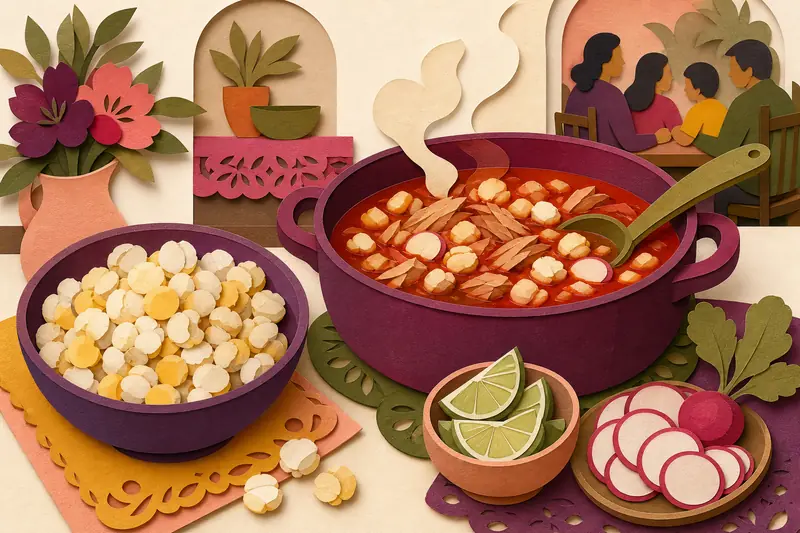
In the canned-vegetable aisle, usually on a lower shelf near the beans, there are cans labeled hominy, and many people walk past them for years without knowing what is inside. The short answer: hominy is corn. Specifically, it is dried field corn that has been soaked and cooked in an alkaline solution until the hulls loosen and the kernels swell to about twice their size. It is chewy, mild and one of the cheapest ways to bulk up a soup, stew or casserole.
How hominy is made
The process is called nixtamalization, and it is thousands of years old. Cooks in Mesoamerica learned to simmer dried corn in water mixed with slaked lime (calcium hydroxide) or wood ash. The alkaline bath does several things at once:
- It loosens the tough outer hull so it rubs off.
- It softens the kernel and makes it swell.
- It changes the corn’s flavor to the one you recognize in corn tortillas.
- It makes niacin, a B vitamin, available to the body in a way plain corn does not.
That last point mattered historically. In regions of the US South where corn was a staple but was not nixtamalized, a niacin-deficiency disease called pellagra was common in the early 1900s. Communities that treated their corn the traditional way largely avoided it.
The same treated corn, called nixtamal, is ground wet to make masa for tortillas and tamales. Left whole, it is hominy.
White and yellow hominy
Hominy comes in white and yellow, depending on the corn it was made from. The flavor difference is small. White hominy is the traditional choice for many pozole recipes and has a slightly cleaner look in a red or green broth; yellow is a little sweeter and more golden. Use whichever your store carries.
Canned vs dried hominy
| Canned | Dried | |
|---|---|---|
| Prep | Rinse and use | Soak overnight, simmer 2 to 3 hours |
| Texture | Soft, sometimes a little mushy | Firmer, chewier, more “corn” flavor |
| Where to find it | Most US grocery stores, near canned beans or in the Hispanic foods aisle | Latin American groceries, some Walmart and H-E-B stores, online |
| Cost | Low, especially the large cans | Lowest per serving |
A large can of hominy (around 25 to 29 ounces) is usually a dollar or two at Walmart or Aldi-type stores and feeds a family as part of a soup. Dried hominy costs even less per serving but takes planning. For most weeknight cooking, canned is the practical choice.
How to cook canned hominy
- Drain the can and rinse the hominy under cold water to remove the starchy, salty canning liquid.
- Add it to a soup, stew or chili for the last 20 to 30 minutes so it absorbs the flavor.
- Or sauté it: heat a little oil in a skillet, add the drained hominy and cook over medium-high heat, stirring now and then, until the edges brown, about 10 minutes. Season with salt, chili powder and lime juice.
How to cook dried hominy
- Rinse the dried kernels and pick out any stones.
- Soak them in plenty of cold water overnight, 8 to 12 hours. They will swell.
- Drain, cover with fresh water by a couple of inches and bring to a boil.
- Lower the heat and simmer, partly covered, until the kernels are tender and many have “bloomed” open like a flower, usually 2 to 3 hours. Add water as needed.
- Salt near the end of cooking. Drain and use, or freeze.
Cooked hominy freezes well. Portion it into 2-cup freezer bags, lay them flat and it is ready for the next pot of soup. That makes dried hominy a good fit for a once a month cooking day: one pot on the back burner gives you several months of soup starters.
Buying and storing hominy
In most US supermarkets canned hominy sits in one of two places: next to the canned beans and corn, or in the Hispanic foods aisle near the canned chiles. Brands like Juanita’s and Goya are common, and many store brands carry it too, often at a lower price. If you cannot find it, ask; some stores keep only the large cans on a bottom shelf.
Unopened cans keep for years in a cool, dry pantry. Once opened, move leftover hominy to a covered container in the refrigerator and use it within 3 to 4 days, or freeze it. Dried hominy keeps for a year or more in an airtight jar, like dried beans, though very old kernels can take longer to soften.
Budget recipes with hominy
Pozole
Pozole is the best-known hominy dish, a Mexican stew traditionally made with pork and served with a pile of fresh toppings. A budget version for six:
- 2 to 3 pounds pork shoulder, cut in chunks
- 1 onion and a few cloves of garlic
- 4 to 6 dried guajillo or ancho chiles (or 3 tablespoons chili powder in a pinch)
- 2 large cans hominy, drained and rinsed
- Oregano, cumin and salt
Simmer the pork with the onion, garlic and water until tender, about 2 hours. Toast and soak the dried chiles, blend them with a little broth and strain the sauce into the pot. Add the hominy and simmer 30 minutes more. Serve with shredded cabbage, sliced radishes, lime wedges and tortilla chips. The toppings are cheap and they are what makes pozole feel like a feast.
Hominy casserole
A classic potluck side in Texas and across the South. Mix 2 drained cans of hominy with a cup of sour cream, a small can of diced green chiles, a cup of shredded cheddar and a little chopped onion. Top with more cheese and bake at 350°F for about 30 minutes, until bubbly. It costs a few dollars and feeds a crowd.
Chili stretcher
Add a drained can of hominy to a pot of chili in place of some of the beef or beans. It adds bulk and a nice chew for very little money, and it works in turkey chili and white chicken chili too.
Crispy hominy snack
Pat drained hominy very dry, toss with a tablespoon of oil and salt, and roast on a sheet pan at 400°F for 30 to 40 minutes, shaking the pan now and then, until crunchy. Season with chili-lime seasoning or garlic powder. It is a cheap stand-in for corn nuts.
Hominy in a frugal kitchen
Hominy is filling, keeps for years in the can and stretches a small amount of meat further. Keep two cans in the pantry and they will rescue a thin soup or a pound of ground beef that needs to feed six. For more ideas along those lines, browse the budget recipes, or see how a single ham turns into four separate dinners, where a can of hominy would fit right into the bean soup at the end. The monthly freezer meal planner is the place to plan it into a cooking day.
Pozole is a traditional dish for Christmas and New Year’s in many Mexican American families, so the large cans tend to be easy to find in December. Buy two or three then, check the dates, and they will keep in the pantry well into next year.
Questions, answered
What does hominy taste like?
Hominy tastes like a mild, slightly earthy corn with a hint of the flavor you know from corn tortillas. The texture is the surprise: the kernels are large, plump and chewy, somewhere between a chickpea and a soft corn kernel. On its own it is bland, so it takes on the flavor of whatever broth, chile or sauce it cooks in.
Is hominy healthy?
Hominy is a whole-grain-style starch that is naturally gluten free and low in fat, with some fiber. The nixtamal process also makes niacin in the corn easier for the body to use. Canned hominy can be high in sodium, so rinse it well or look for a low-sodium can, and check the nutrition label for exact figures.
Is hominy the same as grits?
Grits can be made from hominy, but not all grits are. Hominy grits are ground from nixtamalized corn, while many grits sold in US grocery stores are simply ground dried corn. Whole hominy is the unground kernel you find in cans, used in soups, stews and casseroles.
Do you need to cook canned hominy?
No. Canned hominy is already fully cooked, so you can eat it after rinsing. Most recipes still simmer it for 15 to 30 minutes so it soaks up flavor from the soup or sauce around it. Dried hominy is different and needs an overnight soak and a long simmer before it is tender.