Do dryer balls work? An honest look at wool, plastic and the cost
Dryer balls can soften towels and replace dryer sheets, but they do not fix static on their own. Here is what to expect.
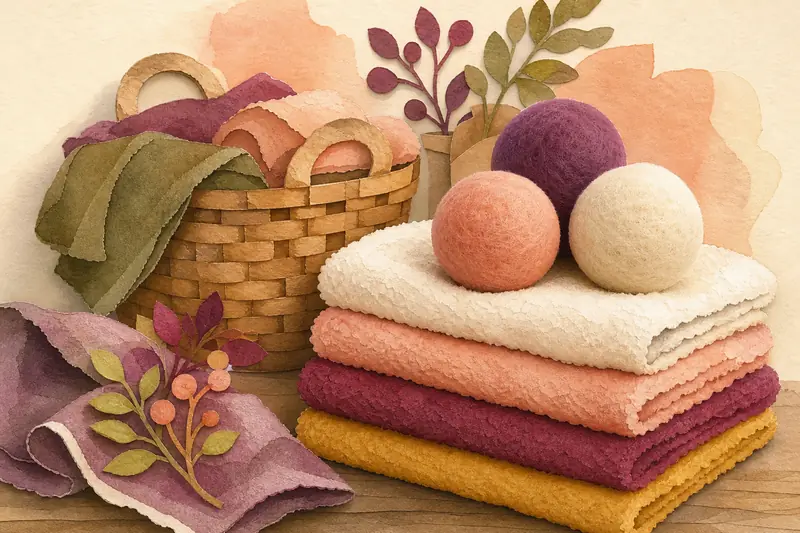
Dryer balls are one of those products that people swear by or shrug at, with very little in between. The truth sits in the middle. They do a few things well, they do not do everything the package implies, and for most families they are a small but real way to stop buying dryer sheets.
What dryer balls actually do
A dryer ball works mechanically. It bounces around the drum and gets between clothes, towels and sheets, so they tumble apart and warm air reaches more of the fabric. That has three effects you can notice:
- Fewer tangled clumps. Sheets and long pants stop balling up into a damp knot in the middle of the load.
- Softer-feeling towels. The constant light pounding fluffs up cotton loops, a bit like shaking out a towel by hand.
- Possibly shorter drying time. Better airflow can help loads dry a little faster. How much depends on your dryer, the load and whether you use auto-dry. Claims on some packages of 25% or more are not something you can count on; treat any savings as a bonus.
What they do not do
Dryer balls do not coat fabric the way a dryer sheet does. Dryer sheets leave a thin layer of softening compound on clothes, which is what makes them feel slick and cuts static. Wool balls leave nothing behind. That is a plus if you have sensitive skin or want towels that absorb well, since softener buildup makes towels less absorbent over time. It is a minus if static is your main problem.
They also cannot fix a dryer that is struggling for another reason. If loads take forever, check the lint screen, clean the vent hose, and make sure the outside vent flap opens. A clogged vent wastes far more energy than any ball can save, and lint buildup is a known cause of dryer fires.
Wool vs. plastic
| Wool dryer balls | Plastic (PVC) dryer balls | |
|---|---|---|
| How they work | Soft, heavy, absorb some moisture | Spiky, light, knock fabric apart |
| Noise | Quiet thud | Loud rattling |
| Softness effect | Good on towels and cotton | Good, can be rough on delicates |
| Static | Slight help | Slight help |
| Lifespan | Hundreds of loads | Many years |
| Heat | Fine at normal settings | Check the package limit |
Wool is the more popular choice for good reasons. It is quiet, gentle on clothes, and made from a natural material. Plastic balls last almost forever and cost a little less, but many people find the noise hard to live with, and some prefer not to heat plastic for years. If you already own plastic balls, there is no reason to replace them until they crack. Tennis balls, an old trick, work in a pinch but can leave fuzz and dye on light clothes and smell of rubber when hot.
The cost math
Prices vary, so here is how to run the numbers yourself.
Take the price of your usual box of dryer sheets and divide by the number of sheets. Dryer sheets often land somewhere around 3 to 8 cents per load. A family doing six dryer loads a week uses about 300 sheets a year.
A set of six wool dryer balls commonly sells for somewhere between $10 and $20 at Target, Walmart or online, and a set usually lasts a year or more. So:
- Add up what you spent on dryer sheets last year. At 300 loads and 5 cents a sheet, that is about $15.
- Compare with the one-time price of the balls, say $15.
- If the balls last two years, you have spent $15 instead of about $30.
The dollar savings are modest, somewhere around $5 to $20 a year for a busy household, and more if you were also buying liquid fabric softener. Any shortened drying time is extra, and it is the part that is hardest to measure honestly.
Make your own wool dryer balls
If you knit or crochet, you may already have what you need. The yarn must be 100% wool, not superwash wool and not acrylic, or it will not felt.
- Wrap yarn tightly around two fingers about 15 times, slide it off, and wrap around the middle to start a ball.
- Keep wrapping until the ball is about the size of a tennis ball. Tuck the end under several strands with a crochet hook or large needle.
- Put the balls in the toe of an old pair of pantyhose, tying a knot between each so they do not touch.
- Wash on hot with a load of towels, then dry on hot. Repeat two or three times until the strands have fused into a firm felt ball.
- Cut them out of the hose and they are ready.
A single skein of wool yarn can make three to four balls, so if you buy yarn on sale with a craft store coupon, homemade balls can cost less than a store set.
Who gets the most out of them
Families who dry a lot of towels, sheets and cotton clothes notice the biggest difference, since those fabrics benefit most from fluffing and separation. Households with sensitive skin, eczema or a baby often switch for a different reason: no fragrance or softener residue on clothes. If most of your laundry is synthetic workout gear and fleece, expect less from dryer balls and more from drying those items separately on low heat.
Getting the most from them
Use three for small loads and five or six for towels and bedding. Dry similar weights together, so jeans are not holding up a load of T-shirts. Pull synthetics out a little early to reduce static, or drop a crumpled ball of aluminum foil into the load. And if you want a light scent, add two or three drops of essential oil to a cool ball and let it soak in for an hour before drying on low or medium heat.
Pairing dryer balls with homemade laundry detergent and a splash of vinegar in the rinse gives you a laundry routine with almost no repeat purchases. The family and home tips page has more ideas for the laundry room and the rest of the house, and if you like scenting the house on a budget, see whether you can refill Glade plug-ins safely before you try it.
Once a month or so, check the balls for loose strands and trim them, and give the lint screen an extra wipe, since wool sheds a little. Keep the balls in the dryer between loads so they do not wander off. Dogs love them, and a wool ball looks exactly like a toy.
Questions, answered
How many dryer balls should I use per load?
Three is a common starting point for a small or medium load, and six for a large load of towels or bedding. More balls mean more separation between items and more tumbling. If you notice no difference, add a few more before deciding they do not work for you.
Do wool dryer balls get rid of static?
They help a little, mostly because clothes dry without being over-dried. Static comes from synthetic fabrics rubbing together in dry, hot air, so the biggest fix is pulling clothes out while they are just dry, or drying synthetics separately. A ball of aluminum foil in the load is a cheap trick many people use for static.
How long do wool dryer balls last?
Well-made wool dryer balls often last for hundreds of loads, and many families use one set for a couple of years. They get smaller and fuzzier over time. Replace them when they have shrunk noticeably or started to unravel, since small balls do less work.
Is it safe to put essential oil on dryer balls?
Use care. Essential oils are flammable, so use only a few drops, let the oil soak in fully before the ball goes in the dryer, and use low or medium heat. Never add oil to a hot ball mid-cycle. If you just want fresh-smelling laundry, hanging items outside for an hour is free and has no risk.