Find your body type with a tape measure and shop for clothes that fit
A soft tape measure and five minutes tell you which cuts to try first, so fewer clothes end up unworn in the back of the closet.
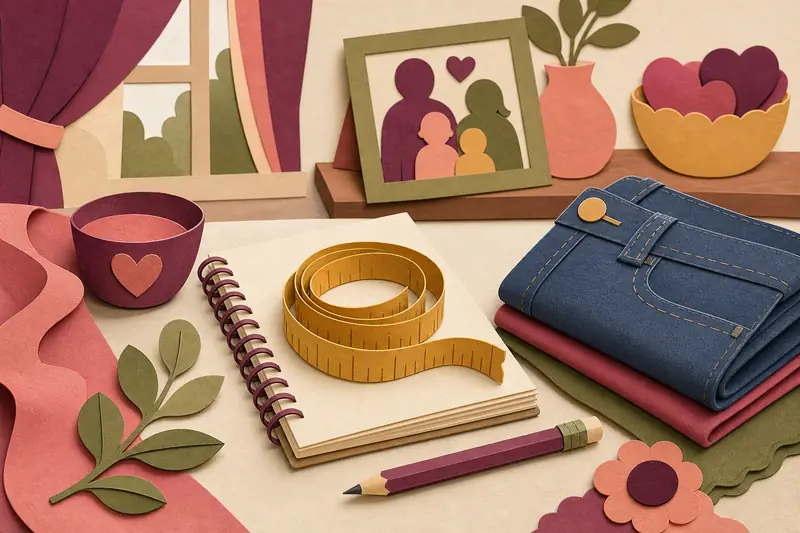
Most closets have a pile of clothes that looked fine on the hanger and never quite worked once they were on. Each piece might have cost only $12, but twenty of them is a car payment. Knowing your proportions is a cheap way to stop adding to that pile, because it tells you which cuts to pull off the rack first and which ones to skip.
Body shape is not a grade. Every shape is common, every shape changes over a lifetime, and none of them is a problem to solve. The goal here is fit: clothes that sit comfortably, move with you and get worn.
Take your measurements
You need a soft sewing tape measure (about a dollar at Walmart or in the craft aisle) and a mirror. Wear thin clothing or just underwear and a bra you actually wear.
- Shoulders: measure around the widest part of your shoulders and upper arms, keeping the tape level.
- Bust: around the fullest part of your chest, tape snug but not tight.
- Waist: around the narrowest part of your torso, usually an inch or so above your belly button. Breathe out normally, do not suck in.
- Hips: around the fullest part of your hips and seat. Look in the mirror to make sure the tape is level in the back.
Write the four numbers down in your phone notes. You will use the waist and hip numbers again every time you order clothes online, since size charts are based on them and sizes vary wildly between brands.
Match the numbers to a shape

The diagram shows the common outlines. Compare your numbers like this:
| Shape | How the measurements compare |
|---|---|
| Rectangle | Bust, waist and hips within a few inches of each other |
| Triangle (pear) | Hips noticeably larger than bust and shoulders |
| Inverted triangle | Shoulders or bust noticeably larger than hips |
| Hourglass | Bust and hips about equal, waist roughly 9 inches or more smaller |
| Round (apple) | Waist equal to or larger than bust and hips |
These are rough guides. If you land between two, read both sections and take what fits.
Rectangle
Your frame is fairly straight up and down, often with a similar width through the shoulders, waist and hips. Many rectangles have long, lean legs.
Styles that often work well add shape at the waist or hem: wrap dresses, belted cardigans, jackets with a seam or tie at the waist, A-line skirts and tops with ruffles, prints or pocket details. Jeans that sit at or just below the natural waist create a clear line. Very boxy, straight tops worn untucked can hide your waist entirely, so if a top feels shapeless, try it with a belt or a half tuck before you give up on it.
Triangle (pear)
Your hips and thighs are wider than your shoulders, and your waist is often clearly defined. It is a very common shape.
To balance the look, bring interest up top with patterned or brighter tops, boat necks, puffed or detailed sleeves and structured jackets that end just above or below the widest point of the hips. A-line and wrap skirts, fit-and-flare dresses and straight or bootcut jeans in a darker wash tend to feel good. Skinny jeans with a plain top can make the hips look like the focus, which may or may not be what you want. A long cardigan that stops mid-thigh is an easy fix.
Inverted triangle
Your shoulders or bust are wider than your hips. Many swimmers and athletic builds fall here.
V-necks, scoop necks and simple, soft tops keep the upper half clean. Add volume below with wide-leg pants, A-line or pleated skirts and pieces with pocket details on the hips. Avoid heavy shoulder pads and boat necks if you want to soften the shoulder line. A well-fitted bra makes a bigger difference for this shape than anything else on the list, and many department store lingerie counters offer free fittings.
Hourglass
Your bust and hips are about the same width with a clearly narrower waist. The main challenge is fit: tops that fit your bust gape at the waist, and pants that fit your hips gap at the back.
Look for pieces that follow your shape: wrap tops, fitted blazers, pencil and A-line skirts, high-rise jeans with stretch. Shapeless tunics can make you look larger than you are. A tailor taking in the waist of a blazer or the back of jeans is money well spent here.
Round (apple)
You carry more through the middle, often with slimmer legs and arms. Many people become rounder in midlife or after pregnancy, and that is simply how bodies work.
Try V-necks and open collars, longer tops that skim over the midsection without clinging, empire waists, open cardigans and jackets worn unbuttoned, and straight or slight bootcut pants. Showing off your legs with a knee-length dress and a great pair of flats balances the silhouette. Very tight waistbands tend to be uncomfortable, so look for flat-front pants with a wider, softer waistband.
Fitting room checks that matter more than shape
Shape tells you what to pull off the rack. These quick tests tell you if it is worth buying:
- Sit down. If the waistband digs in or the button strains when you sit, you will not wear it on a busy day.
- Reach forward as if you were buckling a car seat. A jacket or top that pulls tight across your back is too small in the shoulders, and that is the one area a tailor cannot fix cheaply.
- Lift your arms. A top that rides up past your waistband will spend the day being tugged down.
- Check the side seams. They should hang straight down, not twist toward the front or back.
- Look at the fabric in daylight near a window. Thin knits that look fine under fitting room lights can turn sheer outside.
If a piece passes all five, it is worth the money even at full price. If it fails one, put it back, however good the sale looks.
Turn it into a shopping list
Here is how the numbers pay off. Say you have $60 for a fall refresh and you are a triangle shape. At a Goodwill or Savers you might find a dark bootcut jean for $7, a patterned blouse for $5, a structured blazer for $9, and a wrap dress for $8. Add $15 for a tailor to hem the jeans and take in the blazer, and you have four pieces that fit for $44. Compare that with $60 spent on whatever was on sale, half of which gets returned or forgotten.
The thrift fashion guide covers which stores to try and how to check quality, and inexpensive ways to look polished shows how accessories and layering stretch those few pieces into a week of outfits. For other ways to trim household spending, see the family and home money savers or browse all guides.
Keep your four measurements with you when you shop, and hold a pair of pants up against your waist before you head to the fitting room. It saves a surprising number of trips.
Questions, answered
Can your body type change?
Yes. Pregnancy, nursing, age, hormones and changes in fitness can all shift where you carry weight and how your measurements compare. That is normal and nothing to fix. Measure again whenever your clothes start fitting differently, and shop for the body you have today, since clothes bought for a hoped-for size tend to stay in the closet.
What if your measurements do not match any shape?
Many people fall between two shapes, or have a top half that matches one and a lower half that matches another. Use the shapes as a starting point for which cuts to try on first. The fitting room, and how a piece feels when you sit, bend and pick up a toddler, matters more than any label.
Is it worth paying a tailor to alter cheap clothes?
Often it is. Hemming pants, taking in a waist or shortening sleeves are simple jobs at most local tailors and dry cleaners, and a well-fitted thrift store blazer looks better than an expensive one that pulls across the shoulders. Ask for a price before you leave the piece so the alteration does not cost more than the garment is worth.
Do you have to follow the style suggestions for your shape?
No. They are suggestions for what tends to balance proportions, and plenty of people happily wear the opposite. If you love a style and feel comfortable in it, that is a good purchase. The lists are most useful when you are stuck in a fitting room and cannot say why something looks off.