
How to Start a Scrapbooking Business From Home: Seven Ways to Earn
Custom albums, classes, crop nights and digital kits: realistic ways to turn a scrapbooking hobby into paid work from home.
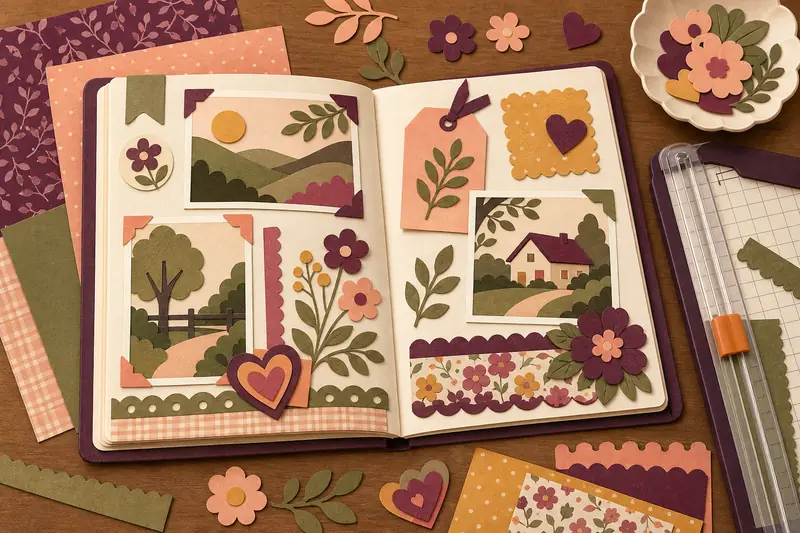
A scrapbooking business rarely starts with a business plan. It starts when a friend sees your baby album and asks, half joking, whether you would make one for her. That question is worth taking seriously, because plenty of people want finished albums and have neither the time nor the patience to make them. The trick is choosing which kind of scrapbooking work to sell, because the options pay very differently.
Seven ways to earn
1. Custom albums for clients. You take a family’s photos and turn them into a finished album: a wedding, a baby’s first year, a graduation, a memorial. Startup costs are low because you likely own the tools already. This is often the most profitable path per hour, once your pricing covers your time.
2. Photo organizing and scanning. Many families have shoeboxes of prints and phones full of unsorted pictures. Sorting, scanning, labeling and backing up photos is a service in itself, and it leads naturally into album orders.
3. Teaching classes. Local craft stores, libraries, community centers and churches host workshops. You charge per seat and include a kit. A class of eight at $25 each, with $6 of supplies per kit, brings in $152 for about three hours including setup. Teaching alone rarely replaces a paycheck, but it builds a reputation and a client list.
4. Crop nights and retreats. Scrapbookers love to work together. Rent a church hall or community room, charge a seat fee, sell snacks and supplies, and add a door prize. Weekend retreats take more planning and insurance but earn more per event.
5. Selling handmade albums and cards. Premade mini albums, baby books with blank photo pockets, and handmade greeting cards sell well at holiday markets. The guide to selling at craft fairs covers finding shows, setting up a booth and pricing.
6. Digital products. Digital paper packs, page templates and printable stickers sell as downloads. Once made, a file can sell many times, though it takes time to build an audience.
7. Direct sales. Several home party companies sell scrapbooking and stamping supplies through consultants. They offer a product discount and a catalog, but go in with eyes open: add up the starter kit, any monthly minimums, and how much of the income comes from selling products versus recruiting. The FTC recommends asking exactly those questions before joining any multi-level marketing plan.
Pricing custom work
Clients will ask for a flat price, and you should be able to give one without losing money. Build it from your actual costs.
| Item | Per 2-page spread |
|---|---|
| Paper, adhesive, embellishments | $3.50 |
| Your time, 45 minutes at $20/hour | $15.00 |
| Tool wear and page protectors | $1.00 |
| Price per spread | $19.50 |
A 20-spread baby album priced this way comes to $390, plus the album itself and any photo printing. That may sound high to a friend, and that is the point of writing it down: it shows what the work is worth. Many makers offer a simpler “memory album” option with fewer embellishments and a faster design at a lower per-spread price, so budget-minded clients still have a choice.
Charge separately for photo sorting and scanning, often by the hour, because a shoebox can take an evening all by itself. Ask for a deposit of at least half before you start, and set a clear delivery date.
What you need to start
Most of your tools are already on the shelf: a paper trimmer, adhesives, punches, a good pair of scissors, a cutting mat. For a business you will also want:
- A flatbed or photo scanner and a backup drive or cloud storage for client photos
- A simple written agreement covering price, deposit, deadline and how photos are returned
- Sample albums you can show, even two or three small ones
- Acid-free, archival paper and adhesives, since clients expect albums to last decades
- A way to track time on each project
Treat client photos with care. Keep originals in labeled envelopes, never trim a one-of-a-kind print without permission, and scan before you work so a copy exists.
Finding the first clients
Your first five clients will most likely come from people who already know you. Show your albums at school pickup, church, playgroups and on your personal social accounts. After each finished album, ask for a photo of the client holding it and permission to share it.
Beyond that circle:
- Leave a sample album and cards with a local photographer, since their clients have fresh photos and no time
- Offer gift certificates before Mother’s Day and the holidays
- Contact wedding and baby shower planners about guest books and memory albums
- Teach one class at a craft store and hand every student a card
A realistic first year
Most home scrapbooking businesses grow slowly, and that is fine. A sensible first year might look like this: make two or three sample albums in the first month, take on a handful of paid clients from friends and family, teach one or two classes, and try a single holiday market with premade albums and cards. Track the hours and income from each so you can see which activity actually pays.
By the end of the year, one path usually stands out. Some makers find they love the quiet work of custom albums; others discover they prefer the energy of a room full of students or a crop night. Put more of your time into the one that earns best per hour and drop the one you dread. Raise your prices a little each time your calendar fills up; a waiting list is the clearest sign that your rate is too low, and returning clients rarely mind a modest increase for work they already love.
Watch the calendar too. Graduation season, wedding season and the weeks before Mother’s Day and Christmas bring the most album requests. Take orders early, set a firm last day for holiday orders, and keep the schedule realistic, because rushed albums look rushed.
Keep it a business
Track income and supply costs from the first job, and keep receipts. Craft service income is taxable even at a small scale, and the IRS explains the basics for self-employed people on its site. Depending on your state, selling physical albums or kits may require a sales tax permit, so check with your state department of revenue.
Leftover supplies and premade pages can be sold on eBay instead of taking over the craft room. For more ideas on earning from home, see the work from home hub, and if you are deciding which paper products to make for markets, read which crafts sell.
Start with the pricing table above. Fill it in with your own materials and a timer running on one real spread, and you will know within an evening whether custom albums can pay you what your time is worth.
Questions, answered
How much should you charge to make a scrapbook for someone?
Price per page or per album using your real costs. Add materials, your hourly rate multiplied by the time each page takes, and a share of tools and supplies. Many makers also charge a separate fee for sorting and scanning photos, since that part can take as long as the design itself.
Is a scrapbooking direct sales company a good way to start?
It can give you a product discount and a ready-made catalog, but read the terms closely. Look at the starter kit cost, monthly minimum orders and whether income comes from selling to customers or from recruiting. The FTC advises checking those points before joining any multi-level marketing company.
Can you sell digital scrapbooking products?
Yes. Digital papers, templates and printable embellishments can be sold as downloads through online marketplaces or your own site. Use only artwork and fonts you created or that are licensed for commercial use, and state clearly what buyers may do with the files.